Controlled Tree Height
Keeps mature trees within manageable boundaries without creating rot pockets.
Safe canopy reduction and height management alternatives that keep Belgian Gardens properties secure.
Canopy reduction and height management across Belgian Gardens
Residents frequently search for tree lopping Belgian Gardens when large shade trees overshadow living areas or threaten roof structures. We convert aggressive lopping requests into safe, arboriculturally sound canopy reductions that protect your property while preserving tree stability.
Fast-growing trees in Belgian Gardens like Rain Trees and Weeping Figs quickly overtake smaller coastal allotments. Indiscriminate flush-topping causes rapid, weakly attached regrowth that fails under cyclonic winds; our method manages tree height without generating these failure hazards.
Keeps mature trees within manageable boundaries without creating rot pockets.
Eliminates long, heavy lever arms that fracture during strong south-easterly gusts.
Stops leaf drop into gutters and keeps abrasive limbs off gutters and roof sheeting.
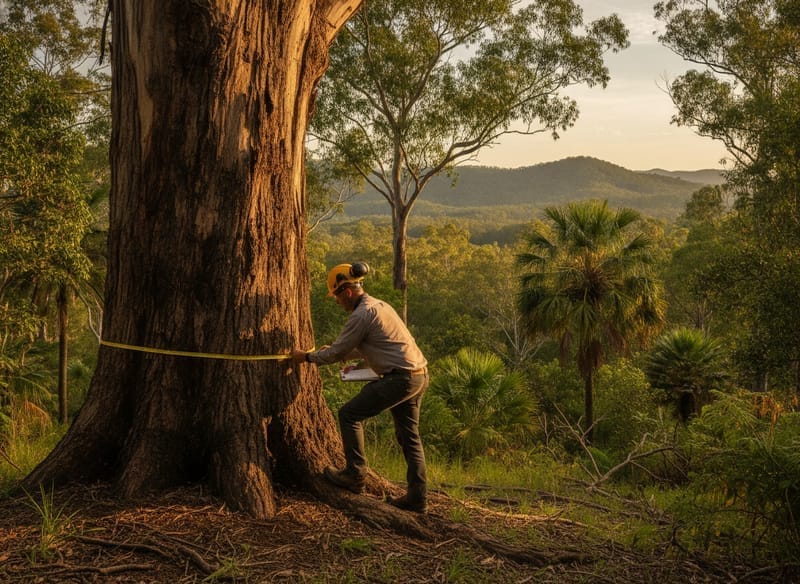
We review tree height, structural health, and clear boundaries around buildings.
We determine the appropriate reduction points to avoid leaving hollow-prone stubs.
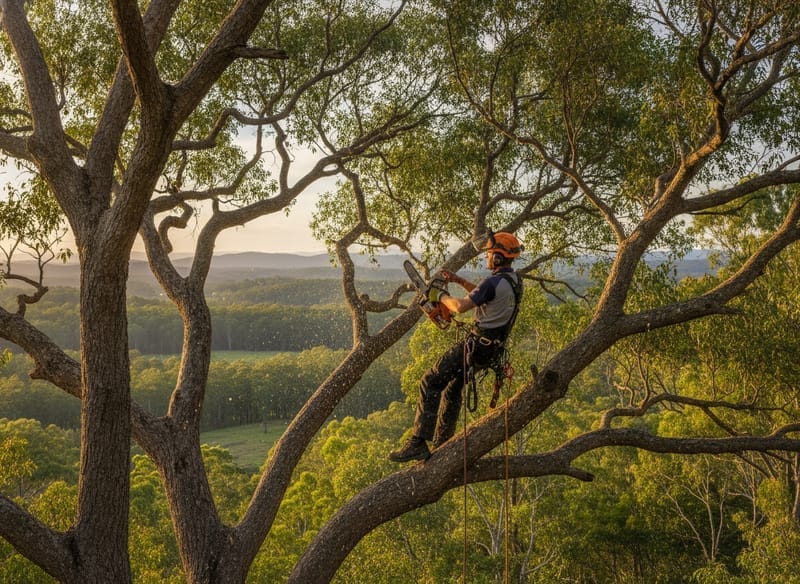
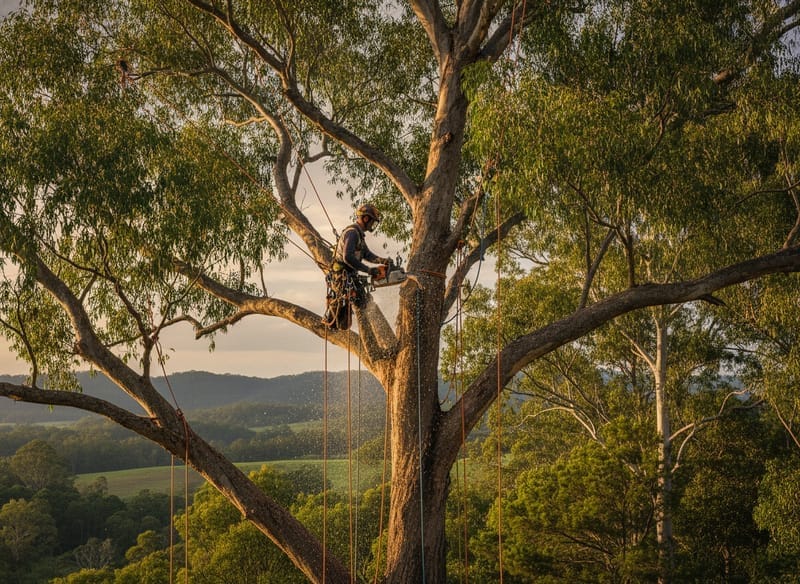
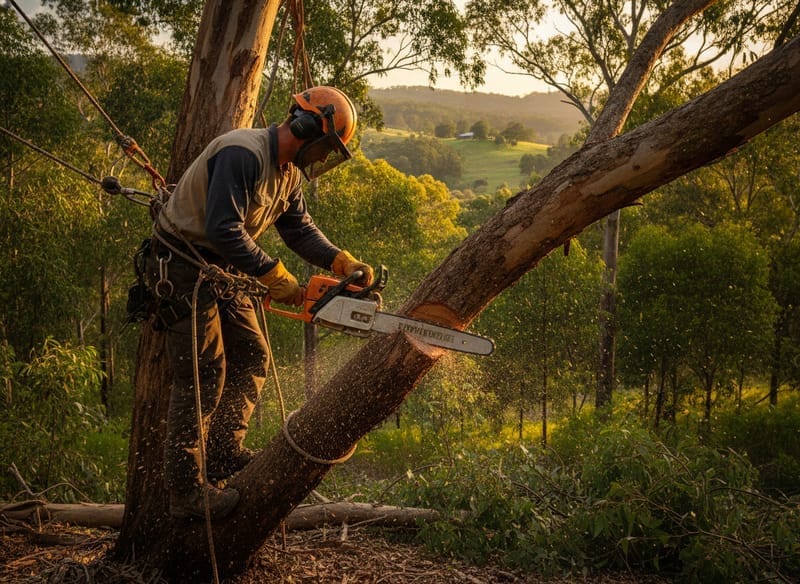
Our team cuts back branches carefully using rigging gear to protect surrounding gardens.
Branches are processed through our chippers, leaving your outdoor areas clean.
Living on the coastal strip of Townsville brings a unique set of challenges for property owners, making professional Tree Lopping Belgian Gardens an essential service. Whether you are managing an established residential block, a multi-unit development, or a commercial property, keeping your tree canopies at a manageable size is critical before the cyclone season hits. When homeowners ask us for tree lopping, they usually mean they want a large tree made smaller, shorter, or less intrusive. In our dry tropics climate, trees like the fast-growing Rain Tree or the widely planted African Mahogany can quickly dominate a yard, encroaching on rooflines, gutters, and overhead powerlines. Our team understands the specific conditions of Belgian Gardens, from the sandy, salt-exposed coastal soils to the sudden heavy downpours of the wet season. We provide targeted canopy reduction services that achieve the size control you want, without compromising the structural integrity of your trees or leaving them vulnerable to the next major storm.
There is a massive difference between a strategic canopy reduction and old-school, indiscriminate lopping. When unqualified operators perform rough Tree Lopping Belgian Gardens, they often use 'heading back' cuts—simply hacking branches off mid-limb. This outdated practice leaves large stubs that struggle to heal, opening the tree up to fungal decay, termite infestation, and long-term structural failure. Worse still, aggressive topping triggers a panic response in the tree. It will rapidly push out epicormic regrowth—spindly, weakly attached shoots that grow directly from the bark rather than the core wood. When the next heavy weather event strikes, such as the 165km/h gusts we saw during Cyclone Kirrily in January 2024, these weak attachments are the very first to snap and cause property damage. Our approach solves this problem by aligning your need for a smaller tree with proper arboricultural science. We utilise AS4373-compliant pruning methods to reduce canopy height and spread safely. By cutting back to natural branch collars and growth points, we ensure the tree heals correctly. You get the clearance and sunlight you need, and the tree retains a strong, wind-resistant structure that won't uproot when the wet season turns the soil to mud.
When you request canopy reduction or lopping, our arborists assess the tree and apply the correct technique to achieve your goals while keeping the tree safe and compliant.
The safest alternative to traditional lopping. We selectively prune branches back to suitable lateral growth points. This brings down the overall height and spread of the tree—ideal for keeping large canopy exotics contained—without leaving decay-prone stubs that ruin the tree's health.
If the primary issue is low-hanging branches blocking driveways, footpaths, or under-canopy structures, we remove the lower limbs entirely. This provides clear space beneath the tree while leaving the upper canopy intact and structurally balanced.
For trees catching too much wind, we selectively remove secondary branches throughout the canopy. This reduces wind resistance and allows light to penetrate to your lawn and gardens, heavily reducing the risk of uprooting during our fierce dry-tropics cyclone season.
Targeted canopy reduction to move foliage away from rooflines, gutters, and power drops. We ensure enough clearance is created to prevent physical damage during high winds, mitigating one of the most common causes of local power outages.
Every successful tree reduction starts with a thorough site assessment. We visit your Belgian Gardens property to evaluate the tree's species, health, and location. We specifically look at wind exposure, previous storm damage, and how the tree interacts with the coastal soil profile before determining the safest way to reduce its size.
Next, we provide a clear, itemised quote. We explain exactly how much of the canopy can be safely removed—usually capping live-crown removal at 25–30% in a single session to prevent systemic shock to the tree. We will tell you exactly which branches will be targeted and what the final shape will look like upon completion.
On the day of the job, our climbers and ground crew arrive with top-handle climbing saws, professional rigging gear, and elevated work platforms (EWPs) where site access allows. If your block has tight access, we utilise rope-access techniques to navigate the canopy safely. We carefully dismantle the overextended limbs, lowering heavy timber safely to the ground to protect your landscaping, paving, and fencing.
Finally, we process all the green waste through our commercial wood chippers. We rake the site clean, ensuring your yard is left spotless, and cart the mulch away in our tipper trucks—or we can leave it on-site for your garden, at your request.
All our canopy reduction work is strictly guided by AS4373 — Pruning of Amenity Trees. We do not practice harmful topping; instead, our AQF Level 3 climbing arborists use approved target pruning to ensure your trees remain structurally sound.
Safety and compliance are non-negotiable for our team. We are fully public liability insured and carry comprehensive WorkCover for all our staff. Whether we are using single-rope access techniques to navigate a tricky backyard tree or operating spider lifts on the street front, we adhere strictly to safe work methods and traffic management protocols.
A major advantage for homeowners here is that Townsville City Council is highly practical regarding private vegetation. Council has no blanket tree preservation order and no general permit scheme for trees on private freehold land. Unless your property falls into the very high importance area mapped on overlay OM-08 under the Natural assets code, you generally have the right to trim or reduce your private trees without council red tape.
However, living in Belgian Gardens means dealing with the realities of the coastal strip. Sandy soils and salt exposure dictate which trees thrive and how they anchor. While native species like the Hoop Pine or Weeping Paperbark handle the wind exceptionally well, other widespread exotics like the African Mahogany can quickly become hazards if they outgrow their root plates in this shallow soil.
It is also critical to remember that under state law, marine plants like mangroves are strictly protected across all tenures, including private coastal boundaries. If your property backs onto tidal edges, any trimming of mangroves requires formal state approvals.
After a significant canopy reduction, your tree will need a short period to recover. In our harsh dry tropics climate, the most helpful thing you can do is provide deep, infrequent watering during the dry months from April to October to reduce moisture stress. Monitor the tree over the next growing season. Watch for a healthy flush of leaves, and contact us if you spot aggressive, spindly epicormic shoots sprouting directly from the main trunk, as this can indicate underlying stress. We generally recommend having our arborists return every two to three years to maintain the reduced canopy size before it regrows into a hazard.
Pricing for canopy reduction in Belgian Gardens depends on tree height, volume of foliage removed, and site access.
We provide clear, written, upfront estimates on all canopy reduction work.
We provide canopy reduction and structural tree management throughout Belgian Gardens and surrounding areas.
Contact our team for safe, arborist-guided canopy and height reduction in Belgian Gardens.
Get a Free Quote